What’s next
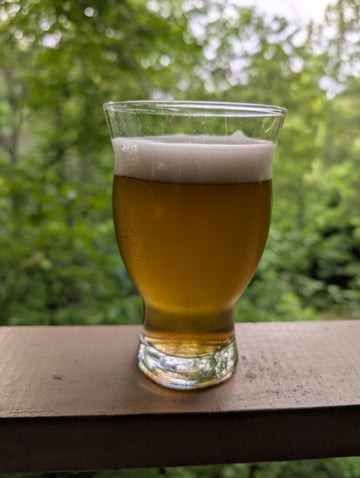
2025 is done. We launched the first Exobrew units in the US and Canada — without outside capital or crowdfunding. For a company of our size, it’s a real milestone. The feedback so far has been largely positive. People love the beer the machine produces. The concept works. The excitement around Exobrew is real.
At the same time, two things matter just as much: inconsistent cooling performance in a small number of units and an unclear delivery timeline for the next batch. Both deserve to be addressed directly.
If you don’t want to read the full update (8 min read), here is the short version:
We identified a cooling performance issue affecting a small percentage of Smart Kegs and paused production to resolve it, rather than ship with uncertainty. Due to supplier delays and factory scheduling around the Chinese New Year, production will not resume until spring, with expected delivery in May 2026. So far, Exobrew has been built without external capital, and pre-orders directly fund production, rework, and delivery.
–
The cooling issue was not something we anticipated. Earlier generations of the Smart Keg — including GEN 1, GEN 2, and early GEN 3 units used in the EU — consistently delivered positive results in testing and real-world use. The US batch is also based on GEN 3 production. As more users in both the EU and the US brewed for longer periods—especially in warmer environments—the issue became more apparent.
Out of approximately 1,400 Smart Kegs produced and delivered in 2024–2025, around 60 units showed cooling behavior that did not meet our target. That’s roughly 4%. By industry standards, that would be considered a low manufacturing malfunction rate. For us, it’s not acceptable. That’s why we stopped reworking Smart Keg stock for the USA, thoroughly investigated the issue, and are now fixing it properly rather than proceeding.
From the beginning, we decided not to raise external capital to enter the US market. We’ve communicated this approach in multiple updates along the way. Under normal circumstances, launching a product like Exobrew in the US would require $1-2 million in upfront investment. Instead, we chose a different path: a minimum-case launch ($40-100K), built on pre-orders, supported by the existing MiniBrew cloud, infrastructure, and team.
Pre-orders were never meant to be a marketing tactic. They were — and still are — the mechanism that enables production, shipment, tariffs, and support. Because of that approach — and because many of you believed in Exobrew early — we were able to rework an EU GEN 3 batch into a USA-based model with UL pre-certification.
We are still a very young company. The foundation is being built while we’re living in it. That’s not an excuse — it’s the reality of how Exobrew was created and why your support directly enabled it to exist at all.
Root cause of the new timeline
Writing this update in the first hours of the year means I need to be completely honest: The news should have been shared earlier.
- We do have good news.
- We do not have good news on the timeline.
Over the past weeks, our team has focused on one question only:
Are we entirely comfortable shipping this product as it is today?
That question guided every decision we made. In Update 13, we expected the factory to provide a clear and fast timeline. That didn’t happen. Several things occurred in parallel:
- Some vendors supplying materials for the rework took longer than expected
- A few suppliers had gone out of business, forcing us to re-source critical components
- We ran additional tests and scenarios
At the same time, we committed not to ship anything we weren’t fully confident in. The root cause of the cooling performance issue was a combination of a new fixture, a change in thermal paste due to a supplier switch, and inconsistencies in the application process. These factors together affected thermal transfer in a small number of units.
Today, we (Exobrew and the factory) are comfortable with the technical direction and the improvements made to address this. See below the test setup.

What we cannot change is factory reality.
The timeline — clearly stated
The factory can only resume rework production after the Chinese New Year, which is in the spring at the earliest. They are operating at full capacity. Production slots are limited, and large brands like Keurig with long-term, high-volume purchase orders naturally receive priority.
- This is not what we hoped for.
- This is not what we planned.
But it is the reality we are navigating. Splitting the order between base and keg has been discussed, but it won’t work for the factory as it takes time to set up the assembly line. As of now, expected production and delivery: May 2026
There’s no way to soften this.
It is a significant setback.
I will personally visit the factory, as I know in-person visits are more effective than working remotely by phone. The goal is to lock down:
- Incoming material timelines
- Assembly line availability
- Testing procedures
- A realistic production schedule — not optimistic
After that visit, you’ll receive another update with concrete dates, not estimates.
Where things become critical
At this point, moving forward depends on execution and trust.
We are proceeding with production. Materials for the rework are being sourced, and we continue to fund this process as we have from the start: through pre-orders. No outside capital has been raised.
This approach was the model we chose early on, and it enabled us to build, certify, and ship the first Exobrew units without external investors.
We’ve read messages from people saying they’re considering canceling. That reaction is understandable. The timeline is longer than anyone wanted — including us.
What’s important to understand is this:
Pre-orders directly enable production. They allow us to source materials, schedule factory time, and complete rework. A significant reduction in pre-orders would make it impossible to move forward with the current plan.
If that were to happen, the consequences would be straightforward:
- The reserved US stock would not be reworked
- Units would instead be reallocated and sold in the EU
That is not an outcome we want. It’s not an outcome the team wants.
And based on the messages we receive daily, it’s not an outcome many of you want either.
We’re not asking for blind trust. We’re asking you to judge us by our transparency, our actions, and the fact that we’re still here — doing the work, sharing the reality, and moving forward as responsibly as we can.
We hope you’ll continue this journey with us.
For current Exobrew users
We also want to speak directly to those of you who already have an Exobrew at home.
Order fulfilment
Our third-party warehouse in Los Angeles has confirmed that two Exobrew units remain available to ship. Based on the original order sequence, we will personally reach out to the next customers to complete those deliveries.
It’s not a large number — but it’s important to acknowledge progress where it exists.
Addressing cooling issues
We know some of you are experiencing issues with the Peltier cooling system. After extensive testing, we now have a more precise and structured path forward.
The first steps are:
- Updating the Peltier control logic via software
- Reviewing target temperature behavior per beer style, instead of enforcing a single rigid target
- Providing a dedicated fixture so thermal paste can be applied correctly and consistently when needed
For users who do not have experience with DIY repairs, we will coordinate with MiniBrew to ship a Smart Keg 2.0 from the EU as an alternative solution, if appropriate.
We will work individually with each affected user to understand the situation and determine the best next step. This process can already begin before production of the new batch starts.
Returns, repairs, and refunds
If a product has been used successfully, beer brewed, and the 30-day cooling-off period has passed, we cannot accept a return or refund.
If a product does not function correctly — for example, due to a cooling issue — our service team will first review the case and propose a repair or corrective action.
If a return and refund are ultimately approved, we will provide a return shipping label and handle the rest.
Our goal is always to fix the issue first and avoid unnecessary returns whenever possible.
Brew kit orders
If you currently have only a brew kit order, those kits will be fulfilled via Northern Brewer, so you’re not blocked from brewing while Exobrew hardware timelines are being resolved.
A Final word on trust
If this were about short-term wins, we would have shipped earlier.
If this were about appearances, we wouldn’t be writing updates like this.
We’re here because we believe Exobrew deserves to exist — and because many of you believed in it early enough to support it through pre-orders.
We understand the frustration.
We understand the anger.
We understand why some of you are considering cancellation or legal action.
We deliberately reduced US sales activity while resolving the Smart Keg’s cooling issue, as shipping more units before addressing it would not have been responsible.
All we ask is this: judge us on whether we’re telling you the truth, and whether we’re still showing up.
We are.
I’ll share the next production update as soon as I return from the factory.
Live Q&A with founder & CEO Exobrew/MiniBrew
We know reading updates is not the same as asking questions directly.
That’s why we’re hosting a live Q&A session with the team, where you can ask questions openly and hear answers directly.
📅 Live Q&A
🕒 January 2nd, 1:00 PM (EST)
🔗 Join link: https://meet.google.com/doo-nhqc-ezb
Or dial: (US) +1 617-675-4444 PIN: 453 695 260 8955#
More phone numbers: https://tel.meet/doo-nhqc-ezb?pin=4536952608955
We’ll answer what we can — directly and honestly.
Before we close
Not everyone wants or needs the same level of detail. Some of you want the outcome and the timeline. Others want to understand what specifically caused the delay regarding the product testing. For those who want more context, we’ve included the test results
In Update #12 (August) and Update #13 (October), we shared that our QA team was investigating the cooling paste layer inside the Smart Keg. Early test results were promising and indicated we were ready to move on.
Still, we did not feel comfortable moving forward yet. The factory's timeline wasn’t clear, so rather than restarting production with limited data, we chose to pause and test further.
1. The environment plays a bigger role than expected.
During testing, we observed meaningful differences between real-world environments.
- In Europe, indoor temperatures are typically 66–71°F (18–21°C)
- In the summer, this may rise to 71–74°F (21–23°C)
In the United States, indoor temperatures are often higher, typically 72–78°F (22–26°C). Based on our testing experience (including in Miami), lowering indoor temperatures to European levels with air conditioning is not always comfortable or realistic. Based on high environmental temperature, we did more testing. Here are some of the results.

Cooling performance is directly affected by ambient temperature as well as humidity. We cannot design a product that assumes users will change their living conditions to make it work.
2. Cooling performance and insulation improvements
With an improved thermal grease and updated fixture application, the Smart Keg, as shared in update 13 (October), achieves a maximum Delta-T of approximately 18°C (65°F). During extended testing, we identified localized cooling leakage:
- Under the handle
- Near the tub container
We added extra insulation under the handle. This change has been tested and consistently delivers a 1°C improvement, particularly in warmer environments.
3. Control logic, sensors, and expectations
As testing continued, three additional factors became important.
Peltier control logic
When the target temperature is set to 5°C, the final degrees are the hardest to reach—typical behavior for Peltier-based systems.
During testing, we observed that lowering the set temperature to 3°C made it easier for the kegs to reach and maintain 5 °C. This confirmed that cooling capacity is present, while control behavior near the lower boundary plays a role.
Sensor tolerance
The temperature sensor has a ±0.5 °C deviation.
Example:
- Actual keg temperature: 5.3°C
- Sensor reading: 5.6°C
- Displayed value: 6°C
In practice, this can appear as a missed target, even when the beer is already within range.
Not all beers require 5°C. Many beer styles are better enjoyed at 6–8°C. When users don’t see 5°C on the dashboard, it can feel like something is wrong—even when the beer is already at an excellent serving temperature.
To be clear, some kegs have a genuine issue, and we are addressing it.
At the same time, cooling behavior depends on multiple variables:
- Ambient temperature
- Insulation
- Sensor tolerance
- Control logic
- Beer volume and style
All of these must be considered together.
Long-term testing — no shortcuts
The factory QA team collected all field data and worked closely with the factory team to investigate root causes. Brewing and fermentation take time—typically 3 to 30 days—and cooling must remain stable throughout that period. Instead of accelerated simulations, we chose longer, real-world testing:
Multiple configurations
- Improved thermal paste application
- 30-day test cycles
- Ambient temperature fixed at 24–25°C (75–77°F)
- Continuous humidity monitoring
- Test results from November / December
- The factory completed cooling performance tests on three kegs using the updated process:
- After 24, 48, 72, 104, 256, 512, 1000, etc hours, all reached a Delta-T of −20°C or more
- Temperature stabilized already after 24–48 hours
- No significant drift observed
Relative humidity remained within acceptable limits. These results gave us confidence to move forward.